📋 Table of Contents
In 2024, a single minute of downtime during a high-profile keynote can cost an enterprise more than just viewers; it erodes brand equity built over years. According to 2024 industry data from HubSpot, video remains the highest ROI medium for marketers, yet 40% of event producers still rely on single-point-of-failure setups that wouldn’t pass a basic IT audit. When you are live streaming SF tech summits, the difference between a viral success and a technical disaster lies in a redundant, 3-stream technical framework designed for resilience.
The real kicker? Most agencies treat streaming as a linear broadcast, but in the San Francisco Bay Area, we operate in a high-interference, high-expectation environment where ‘good enough’ leads to social media backlash. Whether you are a Series B founder launching a product or a CMO managing a global summit, you need a framework that treats video data like mission-critical server infrastructure.
The Core Pillars of the Conference Streaming Framework
Reliability isn’t about having the most expensive camera; it’s about how you route the data from the sensor to the viewer’s screen.
- Primary Stream (The Master): High-bitrate HEVC encoding sent via SRT protocol to a dedicated CDN.
- Backup Stream (The Shadow): A completely independent hardware path, often utilizing network bonding (Fiber + 5G).
- Social/Syndication Stream: A lower-latency, platform-optimized feed designed for engagement on LinkedIn, X, or YouTube.
In our experience with mid-market clients, moving away from a one-off video shoot mentality toward a structured event tech stack reduces day-of anxiety by roughly 90%. We don’t just ‘hit go’; we architect a failover protocol that switches sources in less than 2 seconds if a local ISP drops. For teams looking to scale their content without adding headcount, our video production services provide the technical backbone required for these high-stakes moments.
Stream 1: The Primary High-Fidelity Master
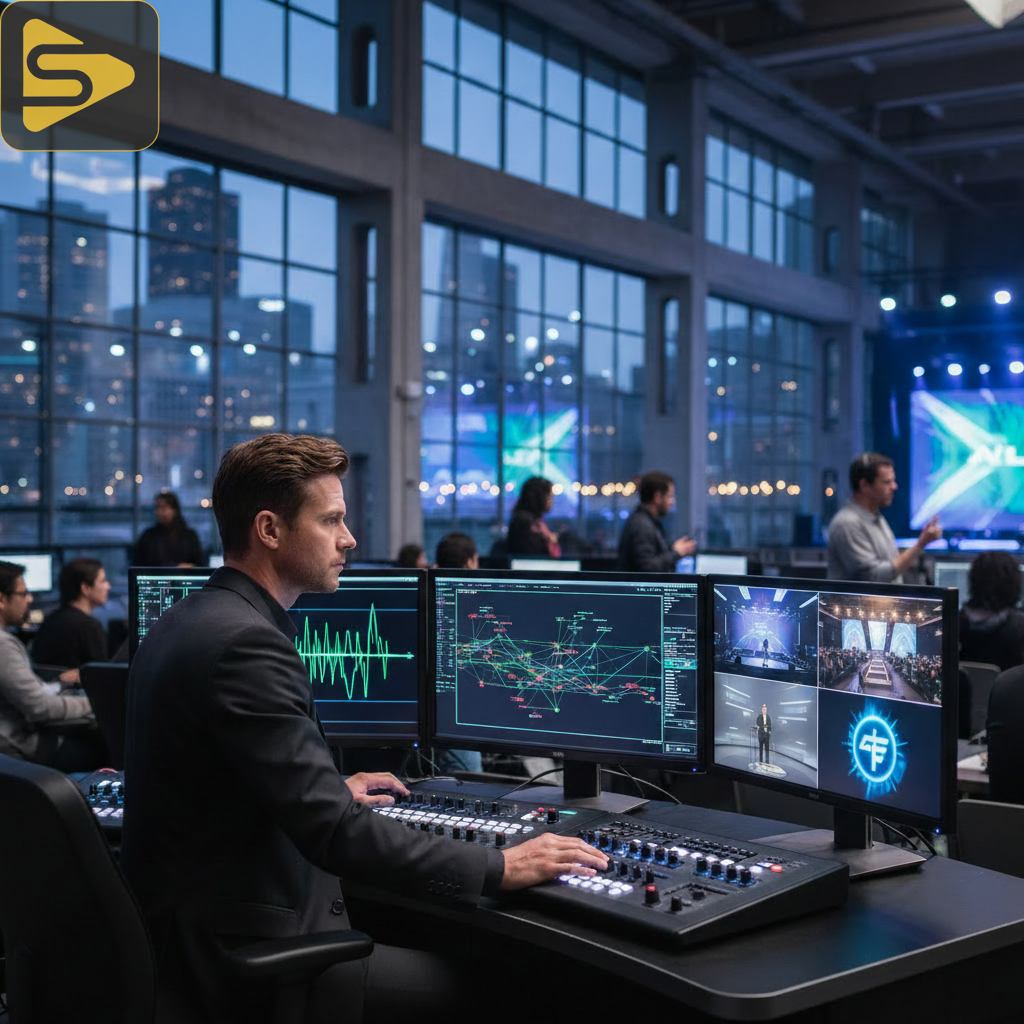
The primary stream must be a pristine, uncompromised representation of your brand’s vision, utilizing the SRT protocol for maximum stability over unpredictable public networks.
What most people miss is that the ‘Primary’ shouldn’t just be a high bitrate; it should be optimized for Multi-CDN Distribution. By pushing to multiple content delivery networks simultaneously, you ensure that if one node in Northern California goes dark, your viewers in London or Tokyo don’t see a buffering wheel. Here is how we structure the primary path:
- Source Acquisition: Multi-camera 4K feeds mixed via Obsidian or vMix workflows.
- Encoding: Hardware-based HEVC (H.265) encoding to reduce bandwidth requirements by 50% while maintaining 10-bit color depth.
- Transport: Using SRT (Secure Reliable Transport) to handle packet loss and jitter common in crowded SF venues.
A typical Bay Area Series B SaaS company we’ve worked with often spends months on their slide deck but minutes on their stream health. We treat the stream like a product launch, ensuring the ‘Developer Experience’ (DX) is flawless, especially for live coding sessions where every semicolon must be legible.
Stream 2: The Redundant Fail-Safe Path
True redundancy means having no shared components between your primary and backup paths—a ‘Zero-Trust’ approach to SF livestream production.
The contrarian truth? Your venue’s ‘dedicated’ fiber line is your biggest vulnerability. Construction on Market Street or a local outage can sever that connection in an instant. To counter this, our framework integrates a ‘Fail-Safe Trinity’ of connectivity: Fiber, 5G, and Starlink. By using network bonding, we create a single, unbreakable pipe for the backup stream.
Comparison of Connectivity Options for SF Summits:
| Connection Type | Pros | Cons | Best Use Case |
|---|---|---|---|
| Dedicated Fiber | Low Latency, High Speed | Physical Vulnerability | Primary Data Path |
| Bonded 5G (LTE) | Mobility, Rapid Deployment | Congestion in Crowds | Secondary Failover |
| Starlink / Satellite | True Path Diversity | Lower Upload Ceiling | Emergency Backup |
Need help auditing your venue’s technical readiness? Schedule a free consultation with our technical directors to review your site plan.
Stream 3: The Social and Engagement Layer
The third stream isn’t a carbon copy of the first; it is a specialized feed designed to drive top-of-funnel awareness and ‘Synchronous Global Participation.’
Social platforms like LinkedIn and Meta have different ingest requirements and audience behaviors. While your primary stream might be a 16:9 cinematic master, your social stream might benefit from AI-driven automated vision mixing to highlight speakers or include real-time captioning for accessibility. This is where most freelance videographers fail—they provide a signal, but they don’t provide a strategy.
- Real-time Interaction: Using low-latency edge computing to allow remote Q&A with less than 2 seconds of lag.
- Global Watch Parties: Routing the third stream to localized hubs for international teams.
- Content Velocity: We often use Ingest.blog, our internal AI content engine, to transform these live streams into searchable blog posts and SEO-optimized summaries within hours of the event closing.
The Role of AI-Powered Marketing Automation
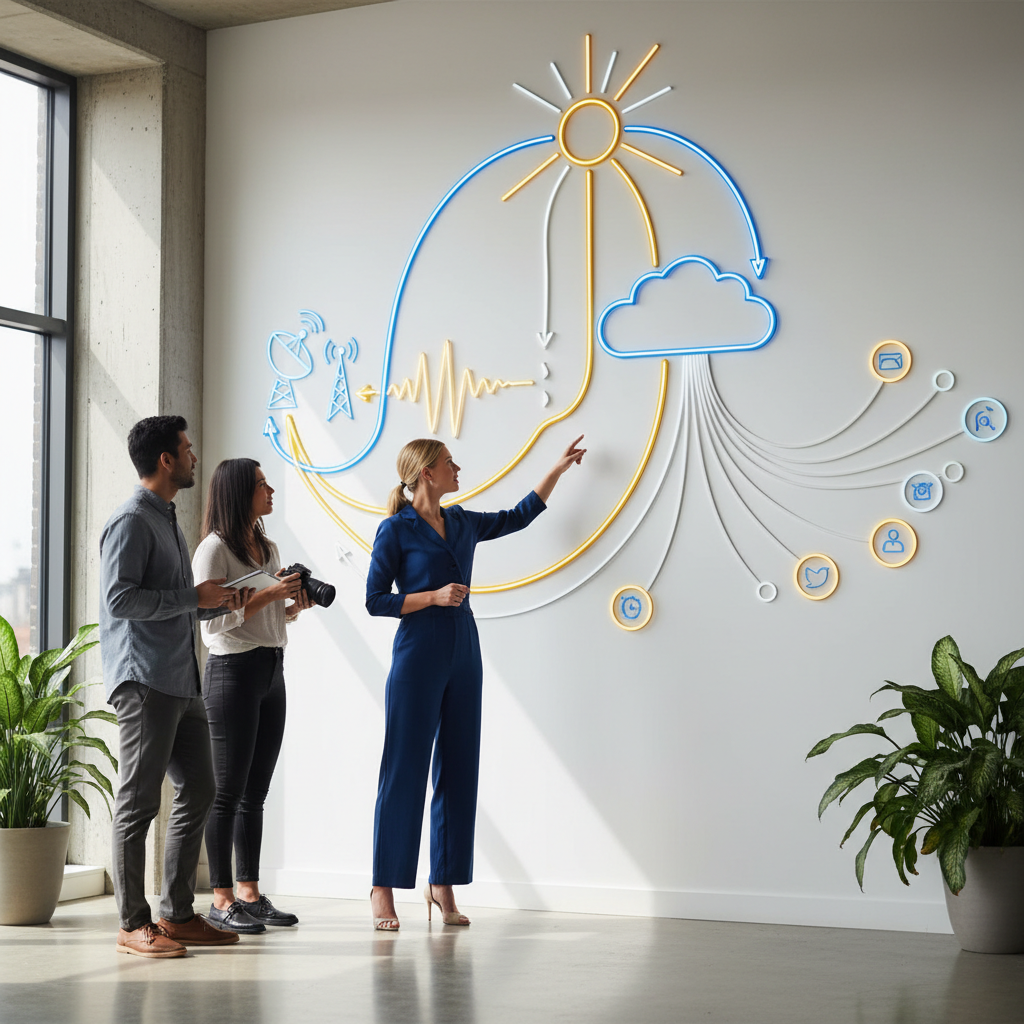
Modern live streaming SF tech summits doesn’t end when the ‘End Stream’ button is clicked; that is just the beginning of the lead nurture cycle.
By integrating your stream data with a marketing automation platform, you can trigger personalized follow-ups based on watch time. For example, if a lead watches more than 20 minutes of a technical keynote, they are automatically moved to a high-intent segment in your CRM. This level of integration is what separates a production partner from a mere vendor.
Key automation workflows include:
- Instant lead capture via gated stream access.
- Automated email sequences based on session attendance.
- AI-generated highlight reels for social distribution.
In our work with corporate comms teams, we’ve found that this ‘integrated production’ approach increases post-event lead conversion by significantly more than fragmented, one-off efforts. If you are struggling with vendor fragmentation, check out our digital marketing strategy services to see how we bridge the gap between production and performance.
Cost-Optimization: Moving Beyond the Satellite Truck
You don’t need a $50,000 satellite truck to achieve broadcast-grade reliability in 2025; you need a smart Remote Integration (REMI) workflow.
Industry-reported ranges for high-end event live streaming in the Bay Area typically fall between $1,500 and $8,000 per day depending on the crew size and camera count. By moving to SRT-based cloud production, we can reduce on-site footprints, lowering costs while increasing the number of distribution points. This is particularly valuable for Series A startups that need to look like Series D giants on a lean budget.
The real value isn’t in the gear—it’s in the system. A one-off video shoot might capture the moment, but a 3-stream framework captures the market. Ready to elevate your next summit? Get a custom quote for your next Bay Area event.
Frequently Asked Questions
What is the SRT protocol and why is it better for tech summits?
SRT (Secure Reliable Transport) is an open-source video transport protocol that optimizes streaming performance across unpredictable networks. Unlike older protocols, SRT handles packet loss, jitter, and fluctuating bandwidth in real-time. For SF tech summits where network congestion is common, SRT ensures a broadcast-quality feed without the latency of traditional RTMP.
How do you ensure zero downtime during a live keynote?
We achieve ‘zero downtime’ through hardware redundancy and network bonding. This involves using two separate encoders running on two different power circuits, connected to three different internet sources (Fiber, 5G, and Satellite). Our 3-stream technical framework ensures that if any single point fails, the secondary system takes over instantly without the viewer noticing.
Can I stream to LinkedIn, YouTube, and a private site simultaneously?
Yes, using a Multi-CDN distribution strategy, we can take a single high-quality master feed and ‘split’ it in the cloud to multiple destinations. This allows you to maintain a high-resolution, gated experience on your corporate website while simultaneously driving organic reach and engagement on social platforms like LinkedIn and YouTube.
What is the difference between a freelance videographer and a production partner?
A freelance videographer typically provides a single camera and a basic feed. A production partner like iStudiosMedia provides a full-stack technical framework, including redundant connectivity, professional audio engineering, marketing automation integration, and post-event content distribution. We focus on the business ROI of the stream, not just the picture quality.
How quickly can I get highlight reels after the event?
Through our AI-powered marketing automation and on-site editing teams, we can deliver ‘fast-turn’ highlight reels within 2-4 hours of a session’s conclusion. This allows your social media team to capitalize on the event’s momentum while the topic is still trending among attendees and remote viewers.