📋 Table of Contents
According to a 2024 analysis by Deloitte, the average cost to develop a new drug has surged to nearly $2.3 billion, making the stakes for a successful biotech brand launch higher than ever before. In the high-pressure SF Bay Area ecosystem, where Mission Bay startups compete with established South San Francisco giants, a generic marketing approach isn’t just ineffective—it’s a liability.
Success in the life sciences sector requires navigating the delicate tension between a Scientific Founder’s technical precision and a CMO’s need for emotional resonance. Moving from a ‘platform-first’ narrative to an ‘asset-first’ brand position requires a structured approach that a standard freelance videographer or a one-off video shoot simply cannot provide. This is where a rigorous pre-production blueprint becomes your most valuable asset.
1. Narrative Pressure-Testing and Scientific Alignment
The most expensive mistake in biotech video production is filming a script that hasn’t been vetted for both scientific accuracy and investor interest.
- Founder vs. Funder Gap: We often see brilliant scientific founders get bogged down in the ‘how’ (mechanisms of action) while investors are looking for the ‘so what’ (market disruption).
- Narrative Simplification: Distilling complex synthetic biology or CRISPR workflows into 90-second visual metaphors without losing credibility.
- Stakeholder Interviews: Conducting deep-dive sessions with PIs and Lead Scientists to identify the ‘hero’ data points of the biotech brand launch.
For many Series B SaaS and life science firms, this stage involves moving away from the ‘double helix’ clichés of the early 2000s toward a ‘Tech-Forward’ identity. Think clean lines, data-driven overlays, and cinematic lab footage that mirrors the sleekness of a high-end software product launch. This alignment ensures that when you finally hit ‘record,’ the message is already optimized for the SF biotech ecosystem.

2. Regulatory Compliant Content Frameworks
In the world of life science marketing, a single non-compliant claim can trigger an FDA warning letter and derail a multi-million dollar clinical trial roadmap.
The real kicker? Most creative agencies don’t understand the nuance of ‘Fair Balance’ or the strict limitations on ‘Promotional Labeling’ under 21 CFR 202.1. Here is how we de-risk the process:
- Legal/Medical/Regulatory (LMR) Integration: We build review cycles into the storyboard phase, not the final edit.
- Claim Substantiation: Every visual representation of a molecular structure or drug delivery system must be backed by peer-reviewed data.
- Disclaimer Design: Integrating ISI (Important Safety Information) or clinical trial disclaimers into the visual aesthetic so they feel native, not like an afterthought.
By treating regulatory compliant content as a creative constraint rather than a hurdle, we help CMOs build trust with both regulators and patients. If you are managing multiple vendors and struggling with inconsistent quality, it might be time for a more integrated approach. Schedule a free consultation to see how we streamline LMR workflows.
3. Visual Architecture and Technical Storyboarding
A successful biotech brand launch depends on high-end visual storytelling that justifies the ‘burn rate’ common in pre-revenue life science companies.
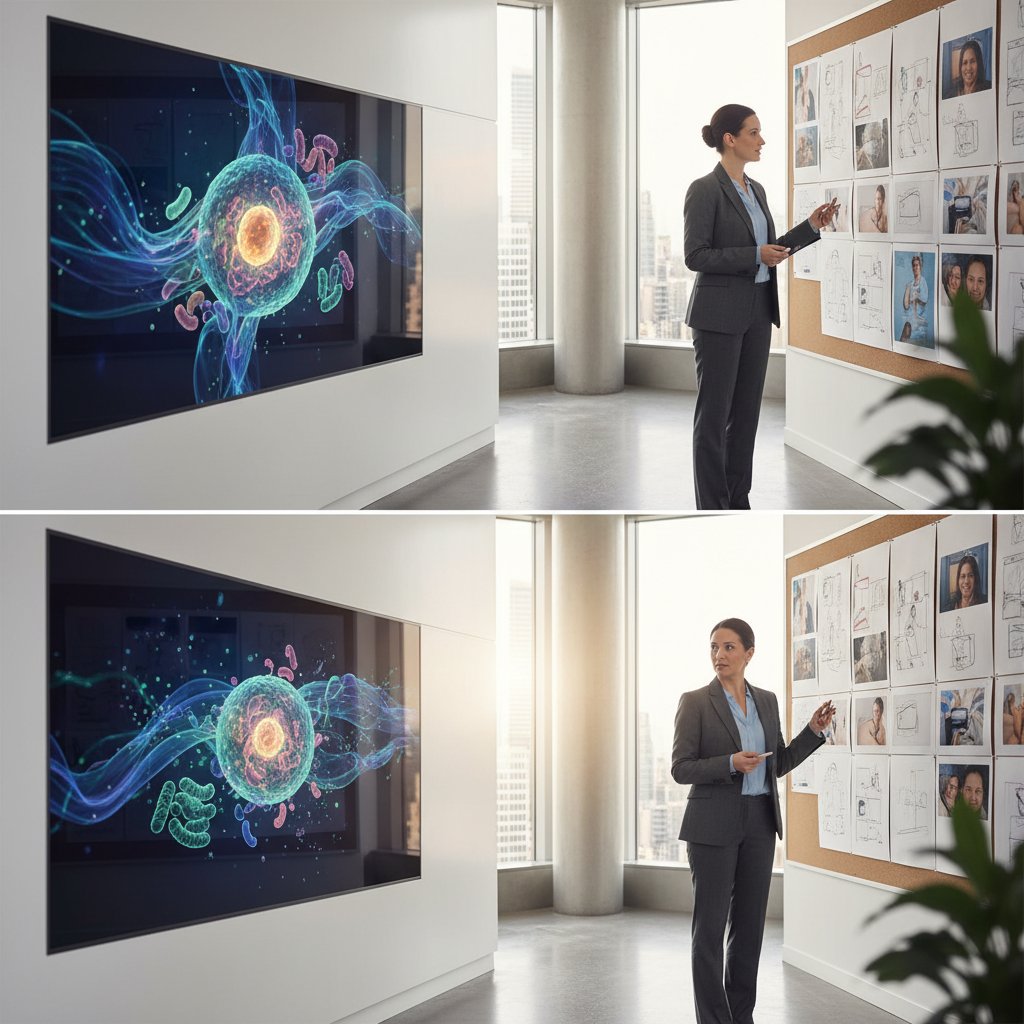
What most people miss is that high-production value isn’t just about ‘looking expensive’; it’s about signaling institutional stability. In our experience with mid-market clients, using 3D medical animation to visualize what the naked eye cannot see—such as T-cell activation or protein folding—is the most effective way to secure Series C interest.
| Asset Type | Typical Bay Area Pricing | Primary Goal |
|---|---|---|
| Brand Film (2-3 min) | $15,000–$50,000 | Investor Relations & GTM |
| Scientific MoA Animation | $8,000–$25,000 | Clinical Validation |
| Patient Testimonial | $5,000–$15,000 | Trust & Awareness |
Transitioning from stealth-to-scale requires a visual roadmap that covers everything from the 4K lab b-roll to the lighting design of the CEO’s interview. We recommend avoiding cheap explainer videos or fiverr video production, as these often fail to meet the rigorous standards of Harvard Business Review-level executive audiences.
4. Strategic Asset Distribution and CRM Integration
Producing a world-class brand film is only 50% of the battle; the other 50% is ensuring it reaches the right Venture Capitalists and strategic partners.
Here’s the thing: most agencies hand over a video file and walk away. A true growth partner integrates that content into a marketing automation platform to track engagement. For a typical biotech brand launch, we recommend the following distribution workflow:
- LinkedIn Ads: Targeting by professional titles (e.g., ‘Director of Clinical Operations’) and specific VC firms.
- Email Nurture: Embedding the video in lead nurture sequences for prospective clinical trial sites.
- Content Velocity: Using Ingest.blog, our internal AI content engine, to generate supporting blog posts and social snippets from the core video assets to maintain SEO momentum.
This systems-thinking approach ensures that your content isn’t just a ‘pretty video’ but a measurable driver of ROI. By leveraging tools like HubSpot or Google Analytics, we can see exactly which segments of your video are holding investor attention and which are causing drop-offs.
5. Budget Optimization: Avoiding the ‘Burn Rate’ Trap
In the SF micro-climate, where talent and real estate costs are sky-high, biotech firms must be ruthless with their marketing spend.
An honest, contrarian insight: You don’t always need a 5-day shoot. Many biotech brand launch campaigns can be executed more efficiently by batching production. For example, a typical Bay Area mid-market client can capture a brand film, executive headshots, and social media vlogs in a single intensive two-day production window.
This ‘Production Sprints’ model prevents the fragmentation of quality that happens when you hire different vendors for studio photography sessions and event live streaming. By centralizing your production and paid advertising with a full-stack partner, you reduce overhead and ensure a cohesive brand voice across all channels. Check out our video production services to see how we scale with your funding rounds.
6. The ‘Stealth-to-Scale’ 90-Day Roadmap
The 90 days leading up to a Series B announcement are the most critical for any life science company’s public identity.
During this period, the focus shifts from internal R&D to external GTM strategy. The pre-production blueprint must include:
- Month 1: Narrative development and LMR framework setup.
- Month 2: Principal photography and 3D asset creation.
- Month 3: Final edit approval, CRM integration, and ad campaign launch.
This structured timeline prevents the ‘panic-buying’ of marketing services that leads to inflated costs and diluted messaging. Whether you are a CMO at a mid-market firm or a founder at a Series A startup, having a predictable series A launch roadmap is the difference between a successful exit and a quiet dissolution.
Ready to Scale Your Biotech Brand?
Don’t leave your brand’s first impression to chance or a generic marketing agency. At iStudios Media, we combine the technical precision of a production house with the strategic ROI focus of a performance marketing agency. We understand the SF biotech landscape because we live here.
Take the next step: Click here to schedule your free strategy session or call us to discuss your upcoming launch. Let’s build a brand that’s as innovative as your science.
FAQs
How do you handle HIPAA and regulatory compliance in video production?
We implement a strict ‘Compliance-First’ workflow. This includes using secure data handling for any patient-related footage and ensuring all scripts pass through our client’s Legal, Medical, and Regulatory (LMR) review teams before a single frame is shot. We are experienced in working within the constraints of FDA 21 CFR 202.1.
What is the typical cost for a biotech brand launch video in the Bay Area?
Based on industry-reported ranges, a high-end biotech brand film typically costs between $15,000 and $50,000. This range accounts for the specialized scientific storyboarding, high-quality cinematography, and the technical accuracy required for 3D medical animations that resonate with sophisticated investors.
Can you help with investor relations branding specifically?
Yes. We specialize in creating investor-grade content that translates complex scientific data into a compelling market opportunity. This often involves a mix of executive interviews, lab tours, and data visualizations designed to build confidence during Series B and C funding rounds.
Why should we choose a full-stack agency over a freelance videographer?
A freelance videographer captures footage; a full-stack agency builds a growth engine. We integrate your video production with SEO, Google Ads, and CRM automation. This ensures your content isn’t just a standalone asset but a strategic tool that generates leads and tracks ROI across the entire marketing funnel.