📋 Table of Contents
According to research by Nielsen, creative quality contributes to 47% of the total sales lift in advertising, yet most Bay Area brands still treat production and media buying as separate, siloed departments. The Integrated Production-to-Performance Flywheel is the operational answer to this fragmentation, turning creative assets into data-driven revenue drivers.
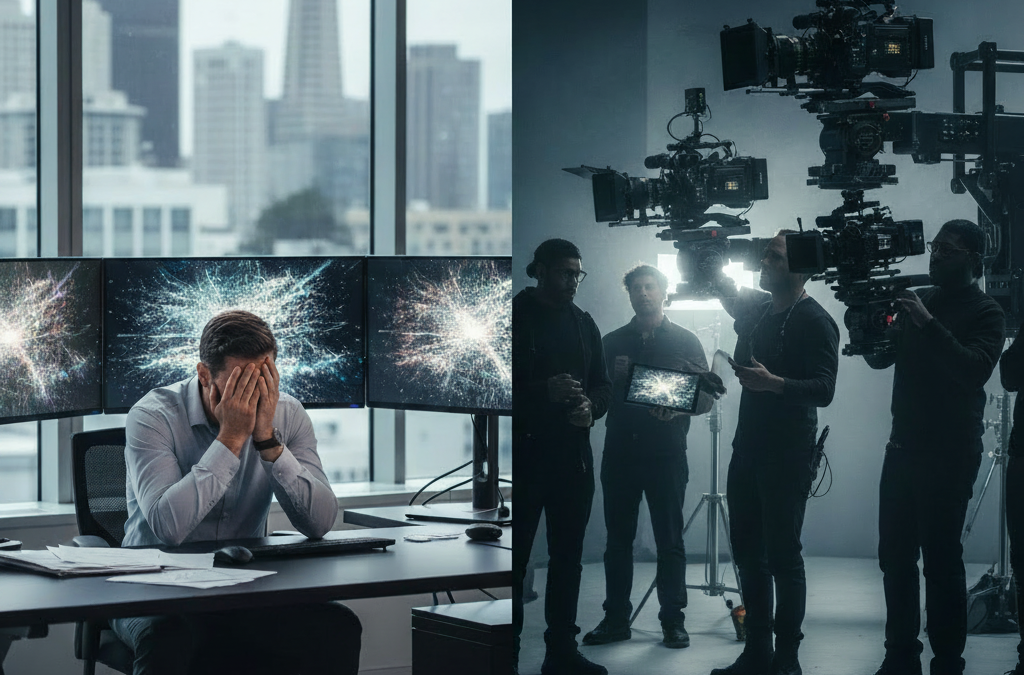
Most marketing directors are exhausted by the “hand-off” model. You hire a freelance videographer for a one-off video shoot, receive a single polished file, and then hand it to an ads manager who struggles to make it work across TikTok, LinkedIn, and YouTube. This linear workflow is where ROI goes to die. In a post-cookie world where technical targeting is losing its edge, the Integrated Production-to-Performance Flywheel shifts the focus back to creative intelligence and systemized distribution.
The Death of the Hand-off: Why You Need a Unified Marketing Framework
The most successful brands have realized that production is no longer an overhead expense; it is a performance lever that requires a circular, rather than linear, ecosystem.
In our experience with Series B SaaS founders, the biggest bottleneck isn’t the ad budget—it’s the creative fatigue. When you treat production as a standalone event, you lack the modular assets needed to test different hooks, calls-to-action, and value propositions. A unified marketing framework ensures that every minute spent on set is captured with multiple distribution channels in mind.
- Creative as Targeting: With platform algorithms now doing the heavy lifting, your creative assets are what actually define your audience.
- Asset Modularization: Breaking a single brand film into 15+ micro-assets for SEO, social, and email.
- Feedback Loops: Using real-time data from Google Ads to inform the next round of creative edits within 24 hours.
The Efficiency of Full-Stack Integration
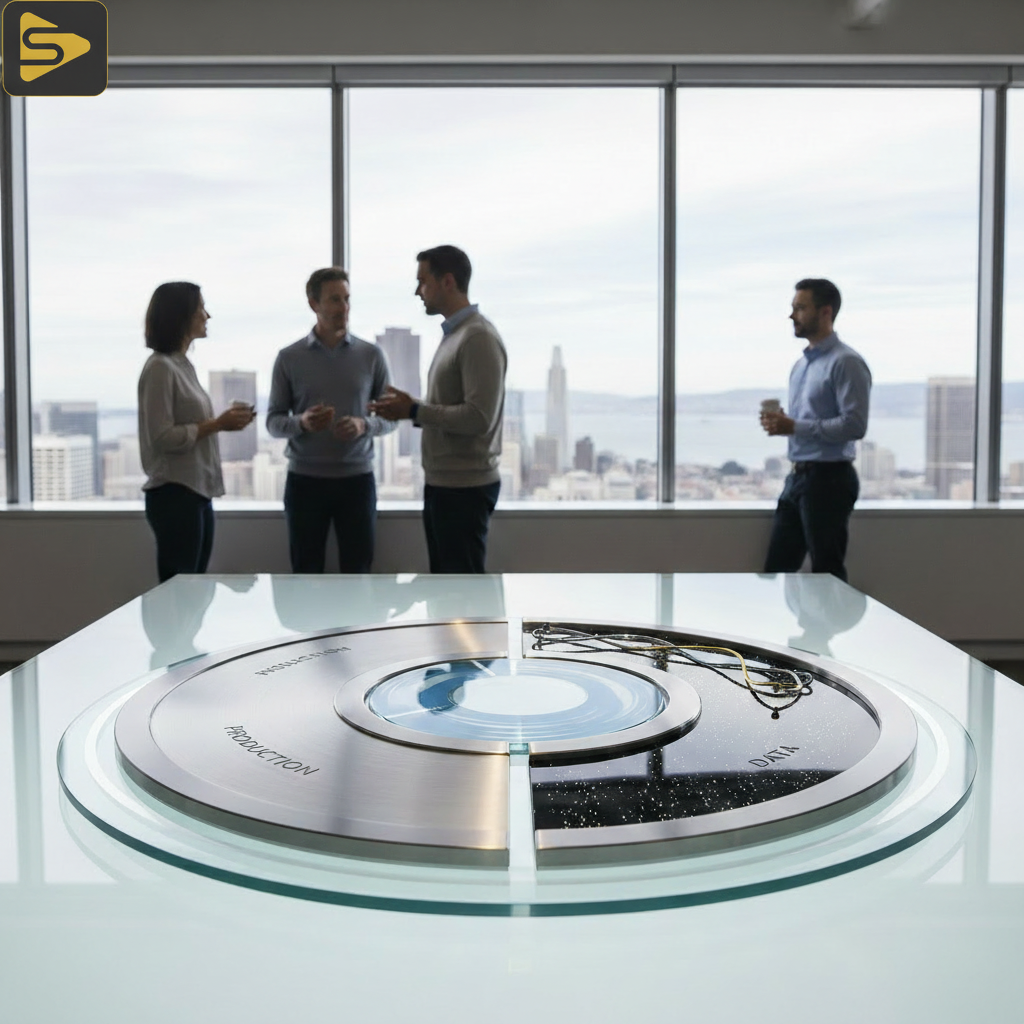
Building an Integrated Production-to-Performance Flywheel requires a full-stack marketing agency approach where the people filming the content understand the CRM automation triggers and the SEO metadata requirements. For example, a typical Bay Area mid-market professional services firm might use a single production day to generate a cornerstone YouTube video, six LinkedIn thought-leadership clips, and 10 high-resolution headshots for their local SEO profile.
If you’re tired of managing five different vendors who don’t talk to each other, it’s time to consolidate. Schedule a free consultation to see how we align production with performance.
Operationalizing Data: The Creative-Media Feedback Loop
The real magic happens when you stop guessing what works and start using performance signals to dictate your content supply chain.
The “Big Idea” is dead; long live the “Big System.” Instead of betting your entire quarterly budget on one “hero” video, an integrated approach uses performance creative—small, iterative tests that identify winning hooks. Once a specific hook shows a high click-through rate (CTR) on Meta, that data should immediately flow back to the production team to build out a high-production version of that concept.
| Feature | Traditional Production | Integrated Flywheel |
|---|---|---|
| Workflow | Linear (Shoot -> Edit -> Post) | Circular (Data -> Shoot -> Test -> Re-edit) |
| Asset Count | 1-2 Finished Videos | 20-50 Modular Assets |
| ROI Visibility | Vague / Brand Awareness | Directly Linked to CAC/ROAS |
| Timeline | 6-8 Weeks | Continuous Iteration |
Leveraging AI and Automation
The rise of Generative AI acts as the lubricant for this flywheel. We use ingest.blog, our internal AI content engine, to help select clients turn video transcripts into SEO-optimized long-form articles and social posts instantly. This ensures that the content distribution framework isn’t just a plan on paper, but a functional system that scales without increasing headcount. According to HubSpot’s State of Marketing report, automation is now the top priority for 76% of high-growth marketing teams.
Maximizing One Production Day: A Blueprint for ROI
The goal of the Integrated Production-to-Performance Flywheel is to extract maximum value from every hour of professional production.
What most people miss is that a high-quality production environment—like our studio in San Leandro—can serve as a content factory. In our work with medical practice owners, we’ve found that capturing patient testimonials and procedure explainers in one session provides enough fuel for six months of Google Ads and local SEO content. This prevents the “content gap” that occurs when brands run out of fresh creative to show their audience.
- Pre-Production: Map out every distribution channel (SEO, Paid, Email) before the cameras roll.
- Multi-Format Capture: Shoot vertically for Reels/TikTok and horizontally for YouTube/Web simultaneously.
- CRM Integration: Use video assets in automated lead nurture sequences to build trust before a sales call.

The real kicker? This approach typically costs less over a 12-month period than hiring a generic marketing agency for one-off campaigns. Industry-reported ranges for corporate video production in the Bay Area often fall between $2,500 and $15,000 per project, but when that investment fuels your entire marketing stack, the cost-per-acquisition drops significantly.
From Cost Center to Profit Center: Reframing Production
When production is integrated into your performance data, it stops being an expense and starts being a measurable driver of creative effectiveness.
Here’s a contrarian insight: Your highest-performing ad is rarely your most “expensive” looking one. It’s the one that resonates with a specific pain point identified through data. By using an Integrated Production-to-Performance Flywheel, you can test low-fidelity versions of ideas before investing in high-end cinematography. This “Agile Marketing” approach ensures that your $10,000–$50,000 brand films are based on proven concepts, not creative whims.
- Sustainable Scaling: Prevent creative burnout by having a library of B-roll and modular segments ready for quick edits.
- Predictive Analytics: Use historical ad performance to inform the scriptwriting process for future shoots.
- Full-Funnel Integration: Ensure your top-of-funnel awareness videos use the same visual language as your bottom-of-funnel retargeting ads.
Need a partner who understands the math as well as the media? Explore our production services or call us to discuss your next campaign.
The 24-Hour Feedback Loop: Real-Time Creative Intelligence
Speed is the ultimate competitive advantage in the SF Bay Area’s hyper-competitive market.
Top-tier brands no longer wait for monthly reports to make changes. They use real-time dashboards (like Looker Studio or Google Analytics) to see which creative assets are driving conversions. If a specific product demo video is converting at 2x the rate of others, the Integrated Production-to-Performance Flywheel dictates that you immediately double down on that style of content. This reduces “waste” in the content supply chain, which is critical during economic tightening.
The Role of CRM and Marketing Automation
Your flywheel isn’t complete until your creative assets are working inside your marketing automation platform. A video shouldn’t just live on YouTube; it should be triggered to send via email the moment a lead hits a certain stage in your pipeline. By integrating production with your CRM, you ensure that every lead gets a personalized, high-touch experience that feels like a 1-on-1 consultation.
Ready to build your engine? Get a custom strategy audit from our team of strategists and producers.
Frequently Asked Questions
How does an Integrated Production-to-Performance Flywheel differ from a traditional agency model?
Traditional agencies often silo creative and media buying. An integrated flywheel ensures that production is informed by real-time performance data, and media buying is supported by a continuous stream of modular, high-quality creative assets, leading to better ROAS and lower creative fatigue.
What is the typical ROI for a unified marketing framework?
While results vary, Bay Area mid-market companies often see a significant reduction in cost-per-lead by moving away from fragmented vendors. By leveraging one production day for multiple channels, the effective cost per asset drops, while creative relevance increases.
Can this framework work for B2B startups with limited budgets?
Absolutely. For Series A-C startups, the flywheel is about efficiency. Instead of multiple small shoots, we focus on one high-impact production day that fuels LinkedIn ads, investor decks, and website content for months, providing a “big brand” feel on a startup budget.
How do you measure the success of the flywheel?
We look at holistic metrics: Creative Effectiveness (CTR and Hook Rate), CAC (Cost Per Acquisition), and Asset Utilization (how many channels a single piece of content fuels). The goal is a decreasing CAC over time as the system becomes more data-informed.
Why is ‘Asset Modularization’ important for modern ads?
Platforms like Meta and Google now favor “Broad” targeting, meaning the creative does the targeting. Modularization allows us to create dozens of variations of a single ad to find the exact combination of visuals and messaging that resonates with your specific customer segments.